Why Ayyam has a sticker for the flying slipper
434 stickers in 13 packs, from the dallah to the flying slipper, in words we collected from our friends, our families and thousands of comments on Ayyam.
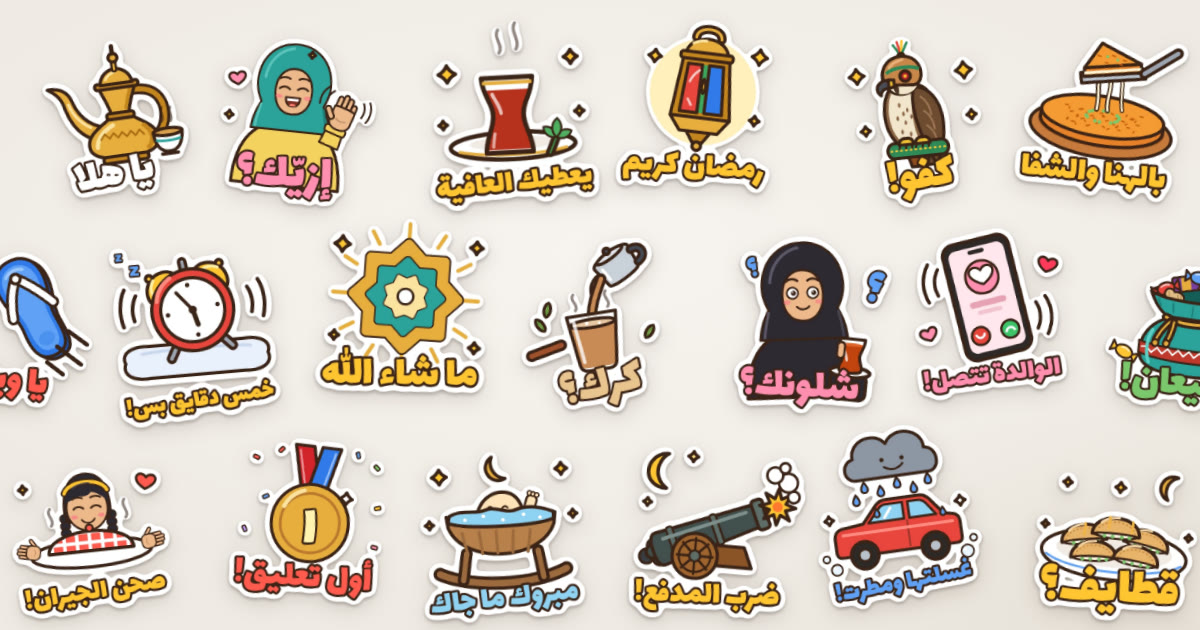
When a friend sends you a photo of the kunafa they just made, nobody writes back “nice”. You say tislam eedak, bless your hands. A cousin passes their exams: mabrouk. Someone loses their father, and there are words for that too, and everyone knows them.
We kept seeing it with our friends and the people we know. Give them a sticker that looks like home (a dallah, a grandmother in her shayla, a slipper in mid-air) and they use it. Again and again. That’s why stickers came first.
The same yellow faces, everywhere
Facebook is built for the whole world at once, and so are the other big apps on your phone. You can see it on the keyboard: the emoji are the same in Cairo, Riyadh and Toronto. They’re useful. But none of them says yaatik al-aafia to someone who has been working all day, and none of them can send azzam Allah ajrakum when a friend has lost someone.
People reach for a picture anyway. In the comments we went through on Ayyam, 3,145 were emoji and nothing else.
Ayyam is made by an Arab team, for Arab families and friends. Stickers are where you see the difference first, in the first chat you open.
Where the words come from
We hold brainstorming sessions with our friends and our families and ask them for the catchy words, the things they say all the time. Each one goes into a design.
Then we check ourselves against what people actually write. For the latest 50 stickers we read 17,343 comments and replies and 9,793 post captions on Ayyam, and counted each phrase by how many different people wrote it, not how many times. (One spam comment pasted under 106 posts would have won otherwise.)
That count showed us something we had wrong.
| Dialect | People whose comments used it |
|---|---|
| Egyptian | 248 |
| Levantine | 177 |
| Gulf | 125 |
| Iraqi | 117 |
Our packs leaned Gulf. The people writing on Ayyam don’t, or not only. So the latest 50 lean the other way: zay el-fol and izzayak from Egypt, kullish helu and shaku maku from Iraq, yijannin from the Levant. And hallo, the greeting written by more people than any other that had no sticker yet: 55 of them.
There’s still a gap. Only 15 people in those comments wrote in a Maghrebi dialect, and the packs have almost nothing from Morocco, Algeria or Tunisia.
What we won’t draw
Some lines were drawn before the first sticker. Nothing sacred is turned into a cartoon: no Kaaba, and nobody shown praying. No charms either, so no blue eye beads and no khamsa. Laylat al-Qadr is a prayer rug under a night sky, with no one on it.
Sometimes a sticker is wrong in a way you only see once it’s finished. People say Allahu akbar in awe as much as in prayer, so the first version showed a man with his hands raised beside his shoulders, palms out. Which is exactly how a prayer begins. We redrew him looking up at the stars, eyes wide, with no hands in the picture at all.
The Ramadan pack was going to get a lantern, until we noticed its own tab already is one. It got a glass of qamar al-din instead, the apricot drink of Egyptian and Levantine iftars.
The same thinking runs through the rest of Ayyam. Our community rules are built on Arab and Muslim values, and some things other platforms allow aren’t allowed here. The Courtesy and Kind words packs exist so the kind reply is also the quickest one: a tap for shukran min al-qalb, thank you from the heart, a tap for kullna maak, we’re all with you.
434 stickers, 13 packs
On 23 October Ayyam had 84 stickers in 12 packs. Since 5 November it has 434 in 13. Each one has its Arabic words inside the drawing, because the words are what you’re really sending. The people look like ours. Most wear the shemagh or the black shayla, and the newest Egyptian, Iraqi and Levantine faces wear a plain shirt or a coloured hijab. And the things are from our homes. The dallah, the finjan, the tea glass on its saucer.
Welcome, come in, help yourself
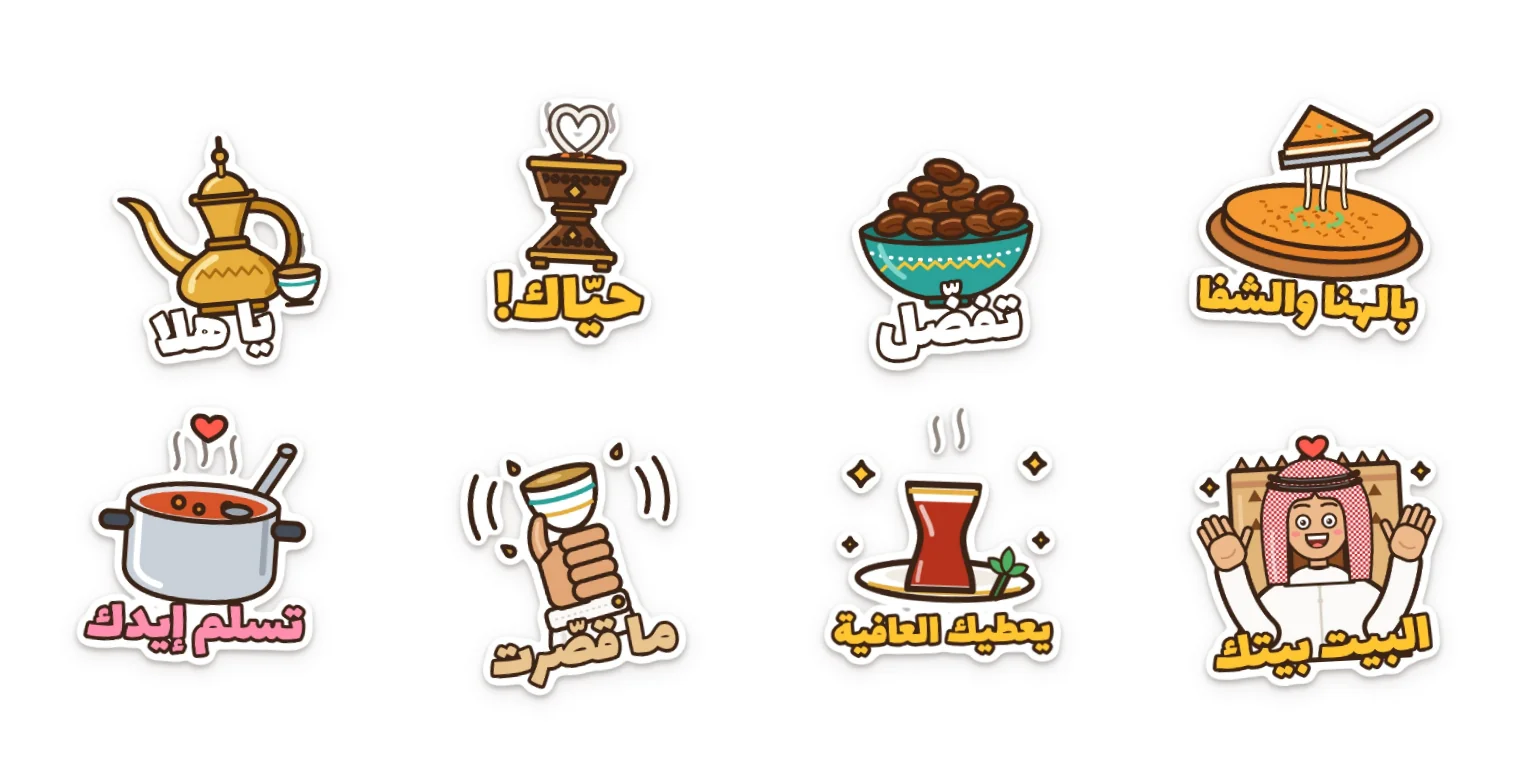
Hospitality starts with a pot of coffee and ya hala, welcome. Then the dates for tfaddal, help yourself, the incense burner for hayyak, the cooking pot for tislam eedak and the tea glass for yaatik al-aafia.
Blessings, for the big days and the hard ones
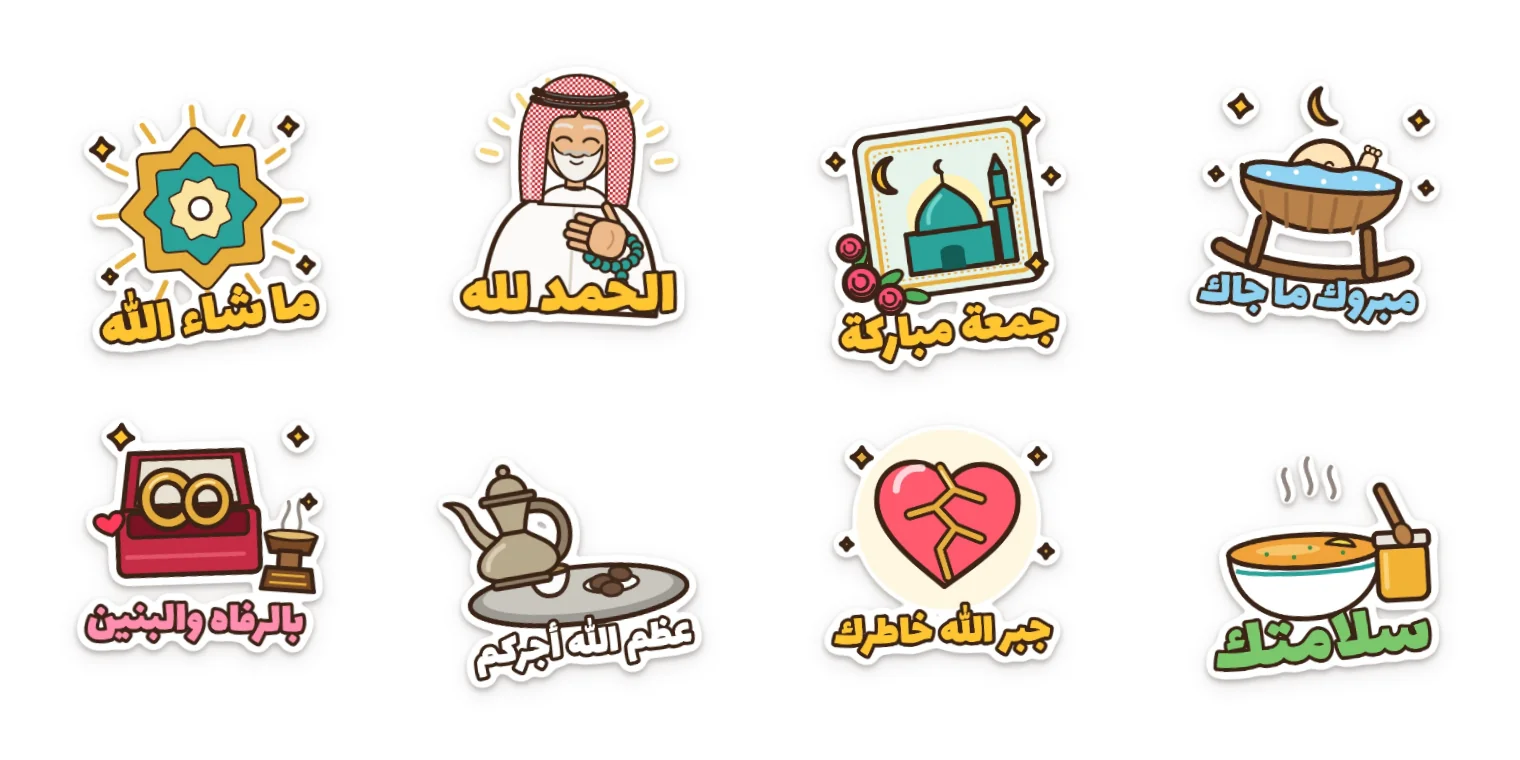
Mashallah when something is beautiful. Jumaa mubaraka on a Friday. Mabrouk ma jak for a new baby, bil-rafa wal-baneen for a wedding, salamtak when someone is ill, jabar Allah khatrak when someone is hurting. And azzam Allah ajrakum, for the message nobody knows how to type.
Ramadan and Eid
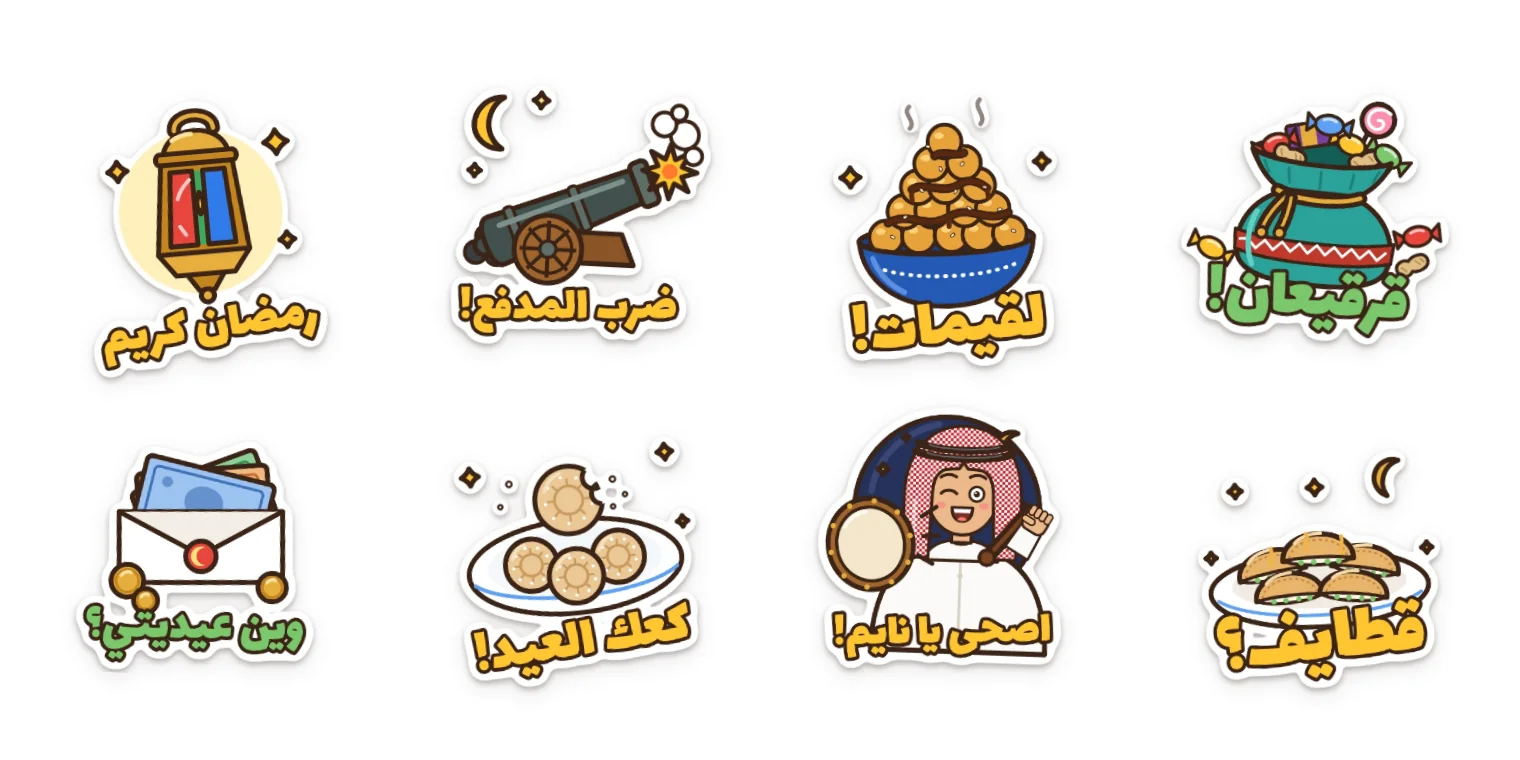
The cannon at sunset. Luqaimat on the table. Children going door to door on Gergean night, and the musaharati with his drum, waking the street for suhoor. Then Eid, and the one question every child asks: wein eidiyti? Where’s my Eid money?
The old days
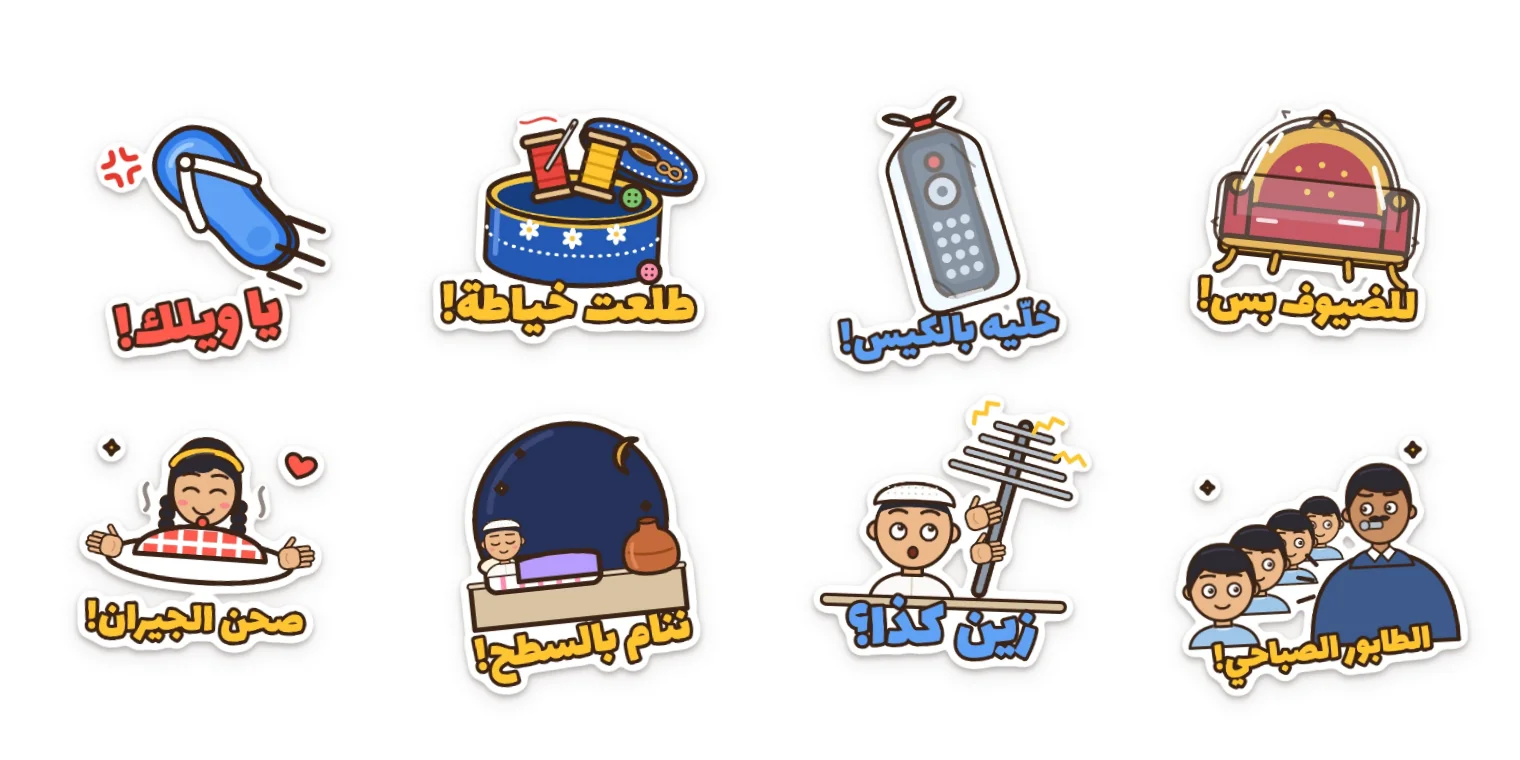
My own favourite is in this pack: the flying slipper. It was my mother’s habit. The funny part is how she shopped for them. Whenever she needed a new pair, she looked for a light one, so it wouldn’t leave a mark or sting when it landed on us.
The rest of the pack is the house you grew up in. The blue cookie tin that only ever held the sewing kit. The TV remote still in its plastic bag. The good sofa, lil-dhuyoof bas, for guests only. Sleeping on the roof on summer nights, the plate of food going back and forth between neighbours, and the antenna someone had to hold while everyone shouted “now?”.
One language, many ways to say it
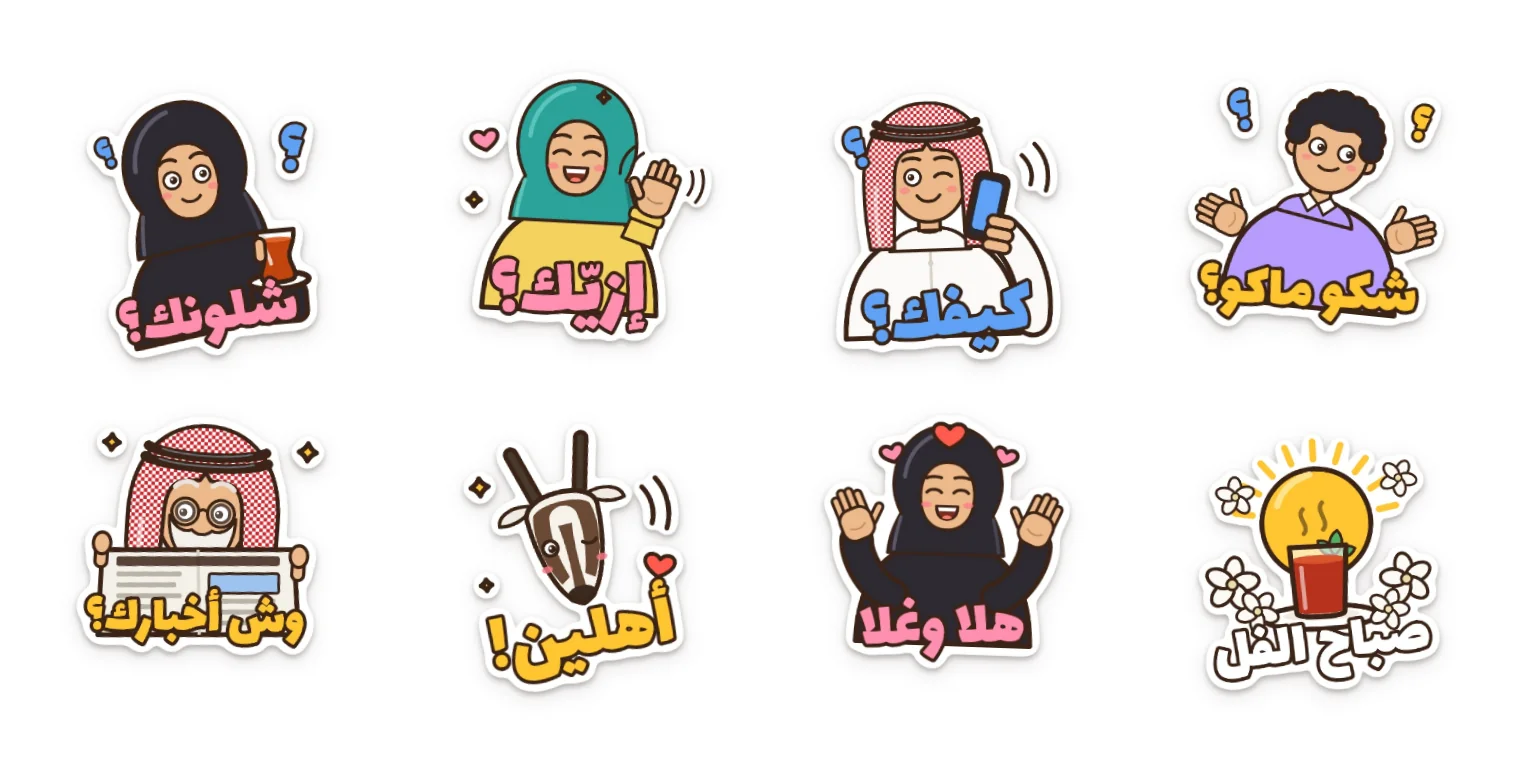
“How are you?” is shlonak in Kuwait and Iraq, izzayak in Cairo and kifak in Beirut and Amman. In Baghdad you’ll also hear shaku maku, what’s new? They’re all in the tray now.
The everyday
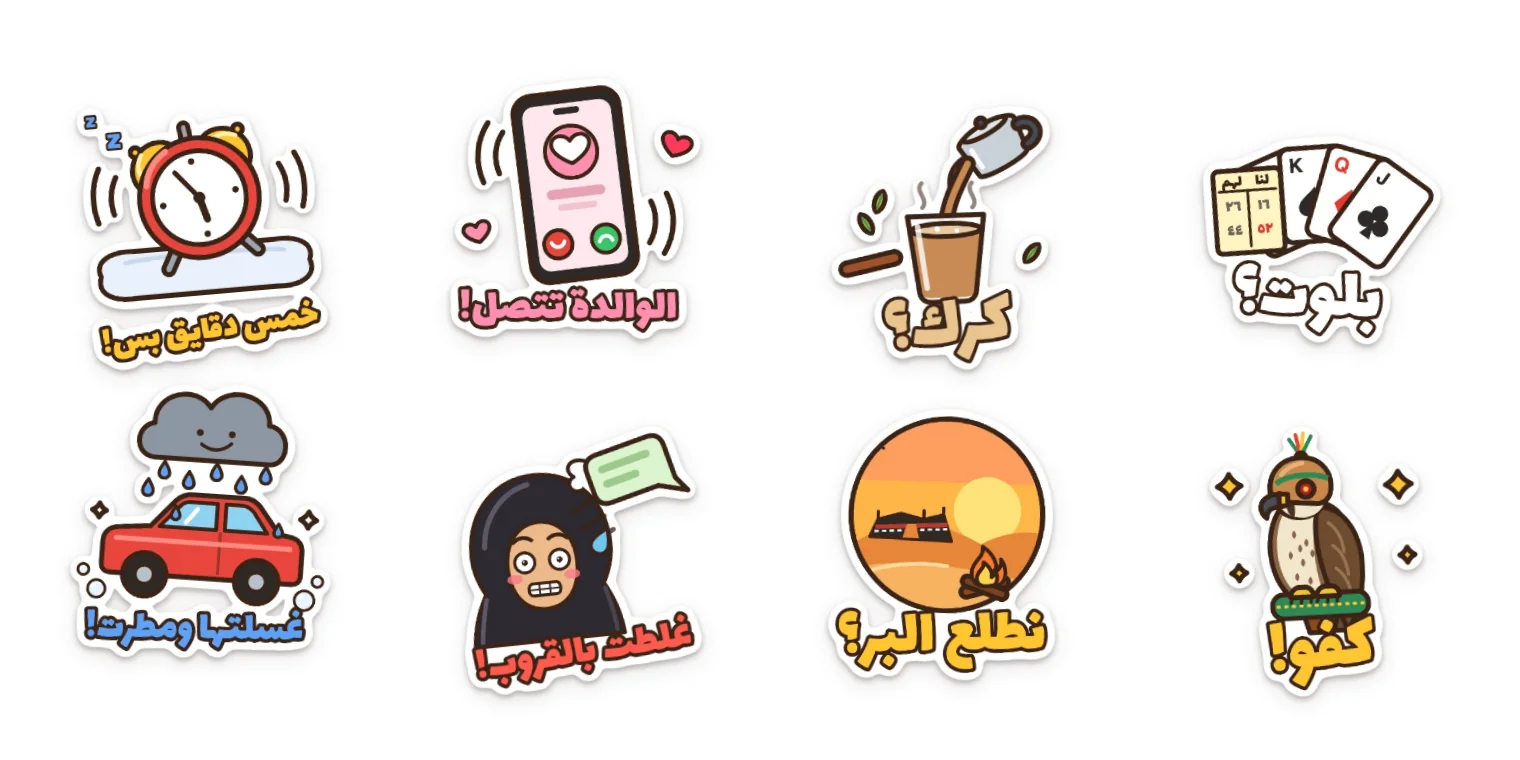
Khams dqayeq bas, five more minutes, for the alarm. Al-walda tittasil, Mum’s calling, which ends any conversation. Karak, a game of baloot, a trip out to the desert. Washing the car an hour before it rains. Sending a message to the wrong group. And the falcon, kafu, for when someone has earned it.
Words for the comments
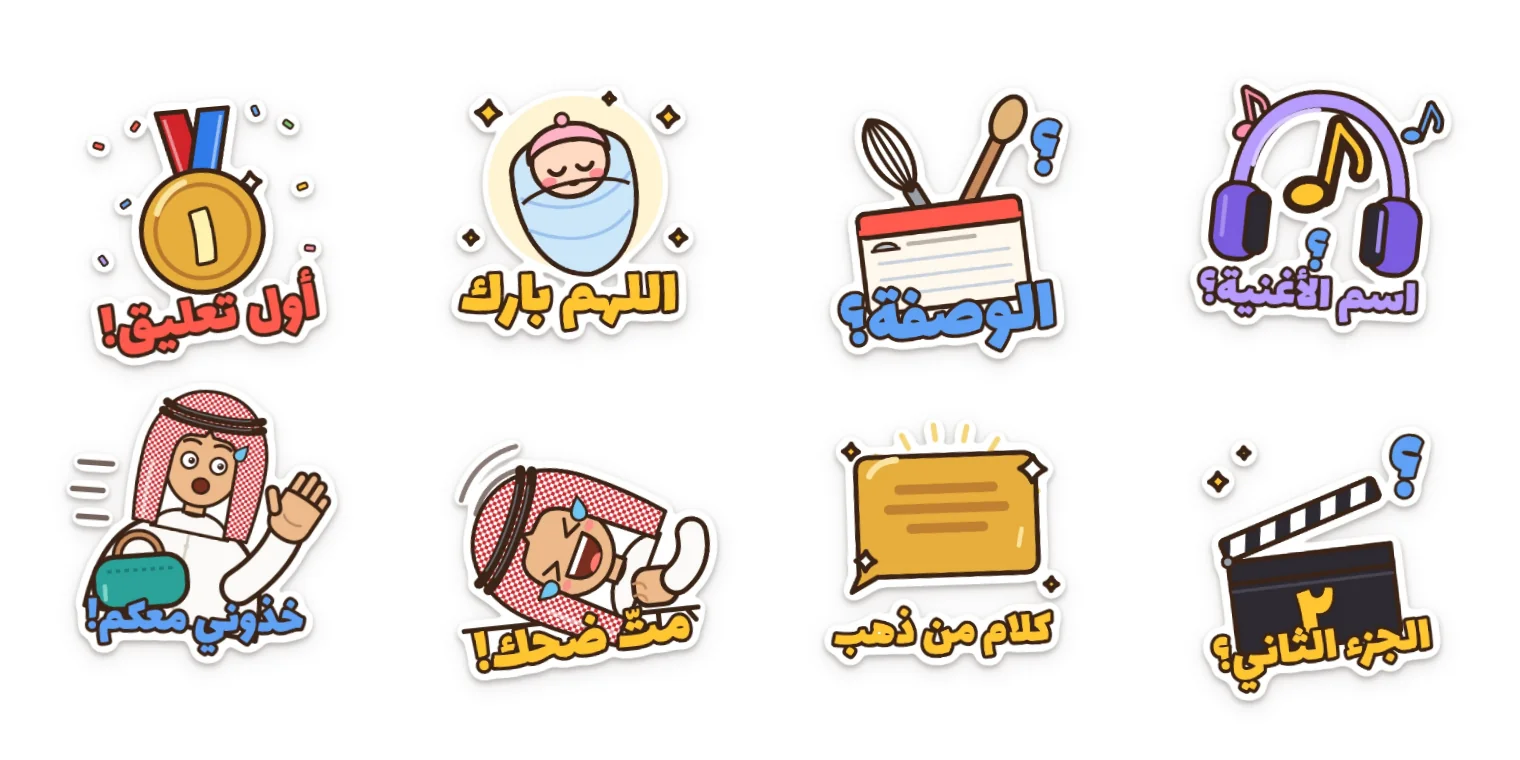
This pack came straight out of the counting. Awwal taaleeq, first comment. Allahumma barik under every baby photo. Al-wasfa?, the recipe?, under every food video. Ism al-ughniya?, what’s the song? And al-juz al-thani? for anyone who stops a story at the best part.
Where you can use them
Everywhere you talk on Ayyam, in the app and on ayyam.com: in chats, in comments and replies under posts, and when you reply to someone’s story. Tap the sticker button in the box where you type.
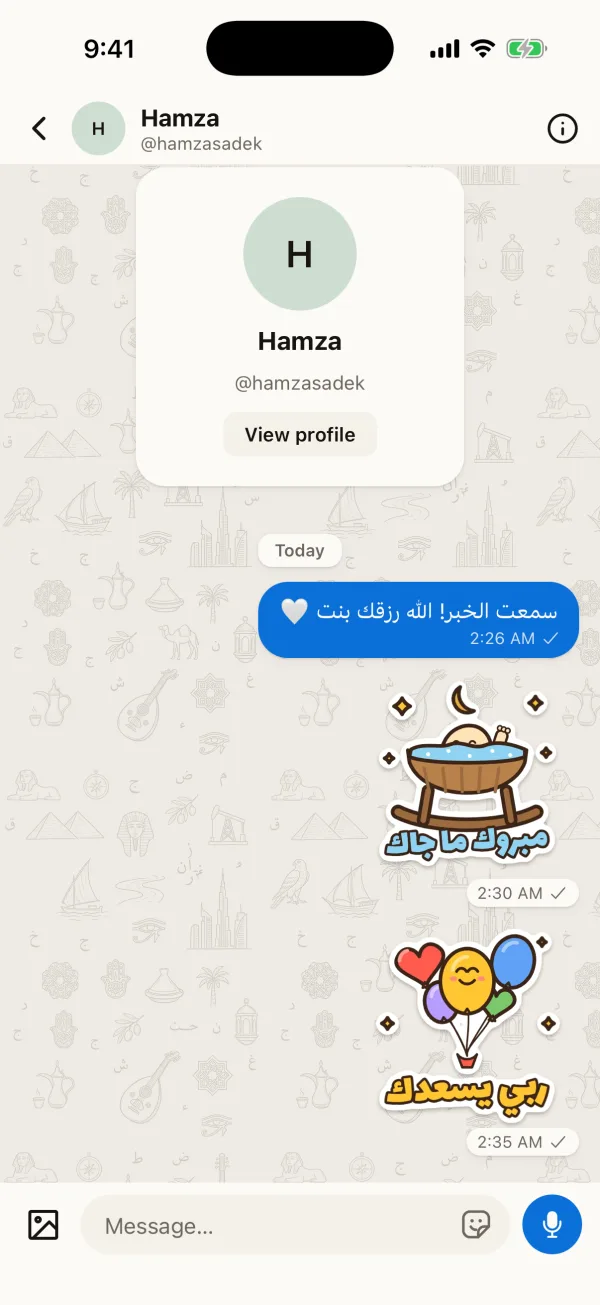
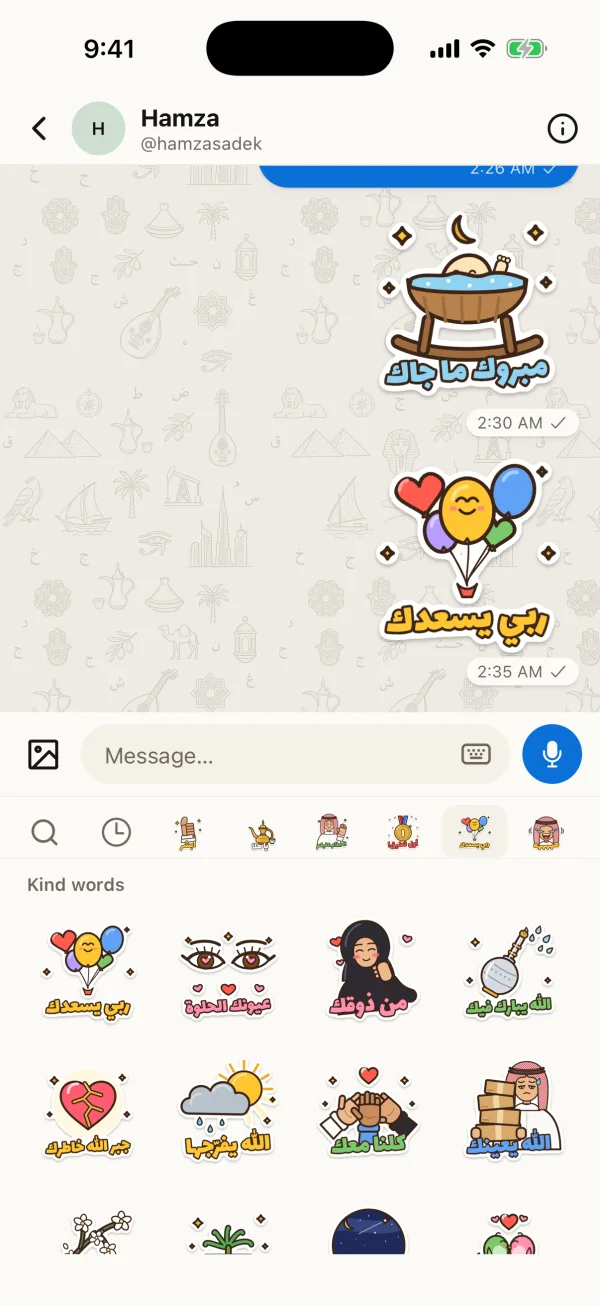
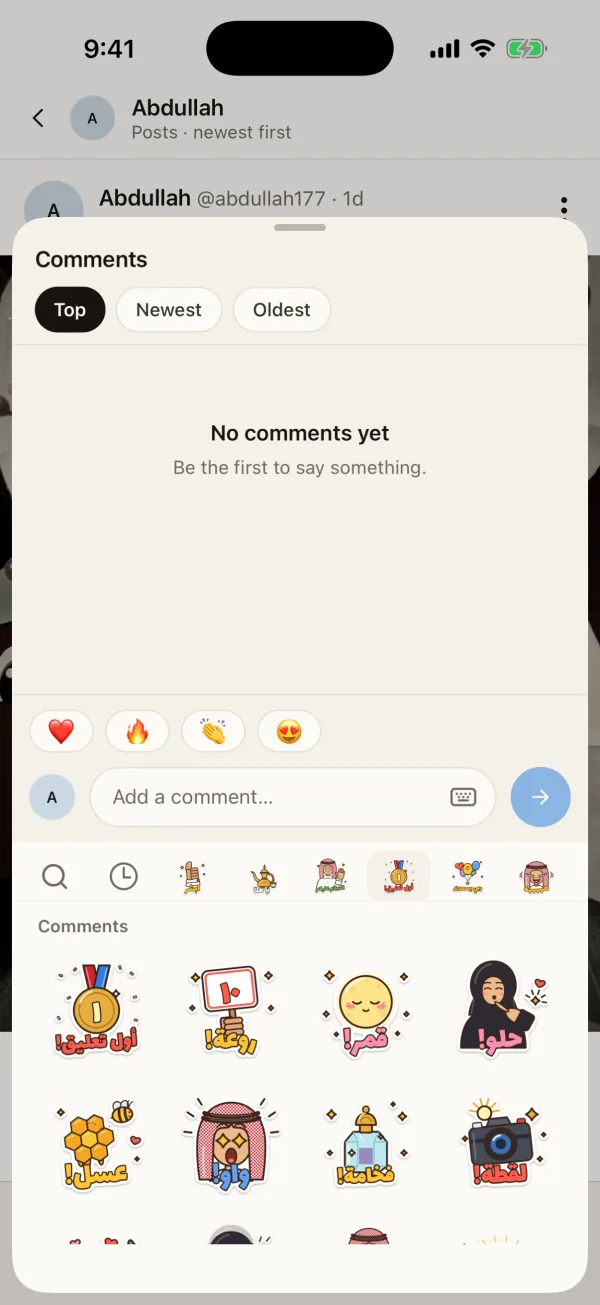
In the app you can search them too, in Arabic or English: tap the magnifier at the start of the row of packs and type مبروك or congrats. On ayyam.com there’s no search yet, so you scroll the packs.
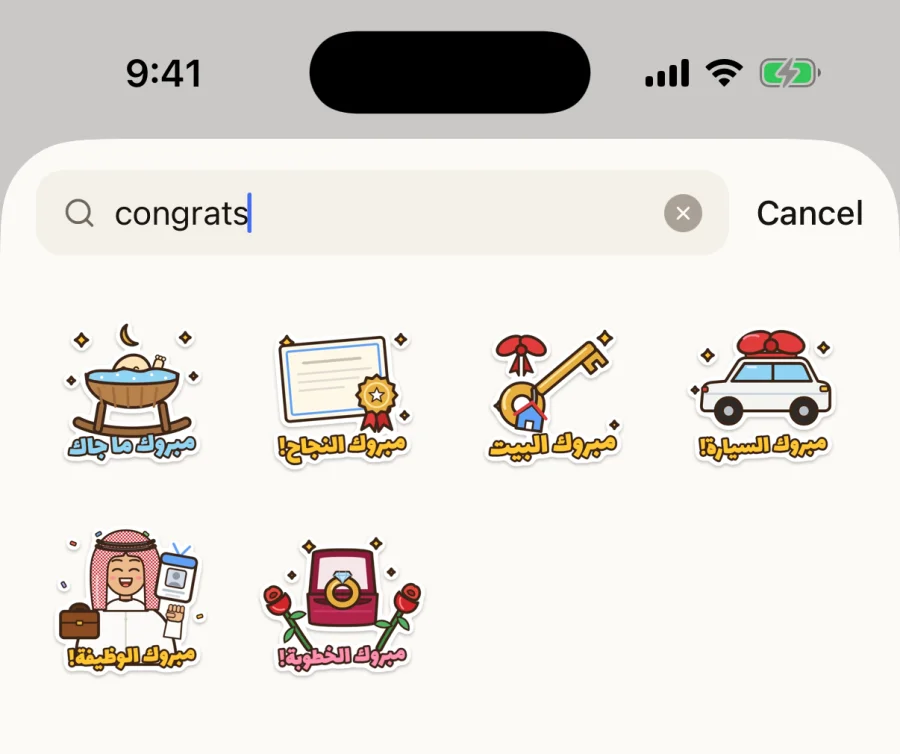
New stickers turn up on their own, with no app update. The last 50 reached everyone’s tray on 5 November.
Missing one?
If there’s a phrase you say every day and it isn’t in the tray, tell us, and tell us where you’re from. Especially if it’s Casablanca, Algiers or Tunis.